Our streamlined approach ensures a smooth registration experience, handling all legal and administrative requirements.

Registrations

Start Your Business with Expert Guidance
At Raasta, we provide comprehensive company formation services that make establishing your business simple and stress-free. Whether you're setting up a proprietorship, partnership, private limited, public limited firm, or a trust/association, our team of experts ensures that every legal and administrative aspect is handled efficiently. We guide you through the process, so you can focus on what matters most—growing your business.
Company Formation – Building Your Business Foundation with Expertise and Precision.
Specific Services
Company Registration/Formation
GST Registration
IEC Registration
ESIC Registration
Digital Signature

Company Registration/Formation
Company registration is mandatory in India to start any business, so fixing the business structures is crucial. The organizational structure you choose will determine the taxes you must pay, the compliance measures you must follow, and the eligibility criteria you need to meet. Hence, it is one of an entrepreneur’s most vital decisions. In India, there are seven different types of company registration. Knowing about these seven types of Company Registration in India will help you make the right decision for your business. This article will explore the seven kinds of Company Registration in India.
- Private Limited Company
- Public Limited Company
- Limited Liability Partnership
- One Person Company (OPC)
- Sole Proprietorship
- Partnership
- Hindu Undivided Family (HUF), HUF Deed
- E-Commerce Business
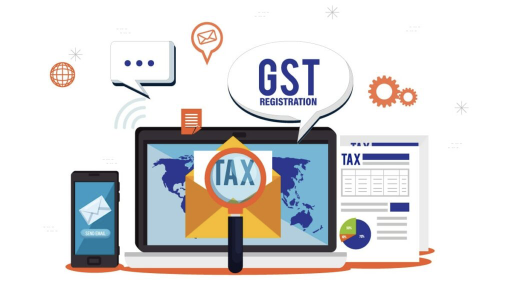
GST Registration
Make your business GST Compliant. Never lose on GST input credit ever. To obtain your GST Registration Number contact to us.
All you need to know about GST Registration Number
What is GST?
GST stands for Goods and Services Tax. It is a value added tax imposed on most goods and services sold for domestic consumption. GST is a comprehensive indirect tax that has been introduced in many countries to replace various taxes such as sales tax, VAT, excise duty, etc., simplifying the taxation process and reducing complexity. It is designed to be a more transparent and efficient tax system applicable at every stage of the supply chain, from production to the final consumer.
GST Registration is applicable on all goods and services except Petroleum products as of now. Goods & Service Tax (GST) is a consolidated tax, which essentially means that State and Central Indirect taxes have been merged. Entire country now operates under a uniform tax system. It now replaces service tax, excise, VAT, entertainment tax, luxury tax, octroi, CST etc.
Structure of GST in India:
In India, the Goods and Services Tax (GST) is a broad indirect tax on goods and services nationwide. It’s a dual model, meaning both the central and state governments collect and manage the tax. Here’s a summary of the GST structure in India:
Central Goods and Services Tax (CGST): CGST is a component of GST levied by the Central Government on domestic supplies of goods and services. It is governed by the Central Goods and Services Tax Act, 2017.
State Goods and Services Tax (SGST): SGST is a component of GST levied by state governments on domestic supplies of goods and services. Each state has its own SGST law that governs the levy and administration of SGST.
Integrated Goods and Services Tax (IGST): IGST is a tax levied on interstate supply of goods and services as well as imports. It is collected by the central government and then distributed among the states. IGST is governed by the Integrated Goods and Services Tax Act, 2017.
Union Territory Goods and Services Tax (UTGST): UTGST is similar to SGST but applies to the Union Territory of India. It is governed by the Union Territory Goods and Services Tax Act 2017.
Cess: In addition to the above taxes, certain goods and services may attract specific taxes that are levied for specific purposes such as funding educational or health initiatives. These charges are levied over and above the GST rate applicable to those goods or services.
The GST Council, led by the Union Finance Minister and including State and Union Territory Finance Ministers, makes recommendations on GST matters like tax rates, exemptions, and thresholds. It ensures uniformity and consistency in GST across the country.
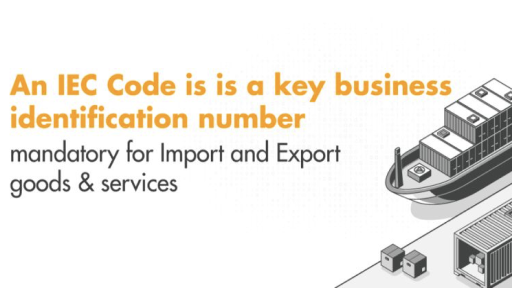
IEC Registration
Get IEC registered. Online IEC Registration in India is compulsory if you wish to export or import.
All you need to know
All businesses which are engaged in Import and Export of goods compulsorily require Import Export Code / IEC Registration.
What is Import Export Code?
Import Export Code (in short IEC Code) is a ten digit number with permanent validity granted by Directorate General of Foreign Trade under Ministry of Commerce and Industry, to any bonafide person/ company for carrying out import/export. Importers are not allowed to proceed without this code and exporters can’t take benefit of exports from DGFT, customs, Export Promotion Council, if they don’t have this code.
When will there be requirement of IE code?
At following instances the IE Code would be required:
When an importer has to clear his shipments from the customs then it’s needed by the customs authorities.
When an importer sends money abroad through banks then it’s needed by the bank.
When an exporter has to send his shipments then it’s needed by the customs port.
When an exporter receives money in foreign currency directly into his bank account then submission of IEC is required by the bank.
One doesn’t need to be a registered entity to apply for import export code; you can apply even as an individual. IEC Certificate is also known as Export License, Import License, IE Code, IEC code, EXIM License. All have the same meaning.
Important Note: As per the recent notification from the GDFT, One needs to renew / update the IEC License every year during April to June.
ESIC Registration
Extend medical benefits to your employees. Register for ESIC.
All you need to know
Employee State Insurance Corporation or ESIC Registration is a self-financing social security and health insurance scheme which provides medical benefit, sickness benefit, maternity benefit and various other benefits such as funeral expenses, free supply of physical aids etc. to the employees and their family.
Any factory or business establishment having 10 or more than 10 employees, irrespective of salary, have to register with ESIC. ESI contributions must be made for all employees having a salary of less than Rs.21,000 per month. Employees with less than Rs. 21,000 monthly wages get health and sickness benefits through this statutory scheme. The state government also contribute 1/8th share cost of the medical benefit.
Who needs to register for ESI? (What establishments need ESI registration?
The following establishments having 10 or more employees attracts ESI coverage.
- Shops
- Hotels or restaurants not having any manufacturing activity, but only engaged in ‘sales’
- Cinemas including preview theaters
- Road Motor Transport Establishments
- News paper establishments
- Private Educational Institutions (those run by individuals, trustees, societies or other organizations and Medical Institutions including Corporate, Joint Sector, trust, charitable, and private ownership hospitals, nursing homes, diagnostic centers, pathological labs)
Rate of Contribution towards ESIC:
Currently, the employee’s contribution rate towards ESIC (w.e.f. 01.07.2019) is 0.75% of the wages and that of the employer’s is 3.25% of the wages paid/payable in respect of the employees in every wage period.
However, this rate keeps on changing from time to time.
Contribution Period and Benefit Period
There are two contribution periods each of six months duration and two corresponding benefit periods also of six months duration.
ESIC registration is a statutory responsibility of the employers of the factory. It is mandatory according to the rules and regulation of the ESI Act 1948.
Digital Signature
Buy Class 2 & Class 3 Digital Signatures for Income tax returns, ROC Forms, GST and Tenders.
All you need to know
A Digital Signature certificate (DSC) is the equivalent of a physical signature in an electronic format, as it establishes the identity of the sender of an electronic document on the Internet. It comes in the form of a USB E-Token, wherein the Digital Signature Certificate is stored and can be accessed through a computer to sign documents electronically.There are three types of Digital Signatures, Class I, Class II and Class III Digital Signature.
Who requires Digital Signature Certificate under MCA21?
Under MCA21 all the authorized signatories of company and professionals who sign the manual documents and returns filed with ROC is required to obtain a Digital Signature Certificate (DSC). Therefore following personnel have to procure Digital Signature Certificate:
- Directors
- CA's/Auditors
- Company Secretary – Whether in practice or in job.
- Bank Officials – for Registration and Satisfaction of Charges
- Other Authorized Signatories, Credentials required with Application Form
Streamline Your Business Setup with Expert Guidance
-
Efficient Registration Process
-
Strategic Compliance SupportWe provide ongoing support to ensure your business remains compliant with regulatory standards and operational best practices.
-
Expert ConsultationOur team offers personalized advice to help you navigate the complexities of company formation and set a solid foundation for success.